

You’ve Been Told to Eat Less and Move More. But Has Anyone Told You It Wasn’t Your Fault?
Dr. Lindsay Ogle, MD joins me on the GLP-1 Studio Podcast to explain why that old “eat less, move more” mantra doesn’t just miss the mark, it erases the actual biology behind obesity, insulin resistance, and why so many of us have been fighting a battle our own bodies were never built to win alone.
Key Take Aways
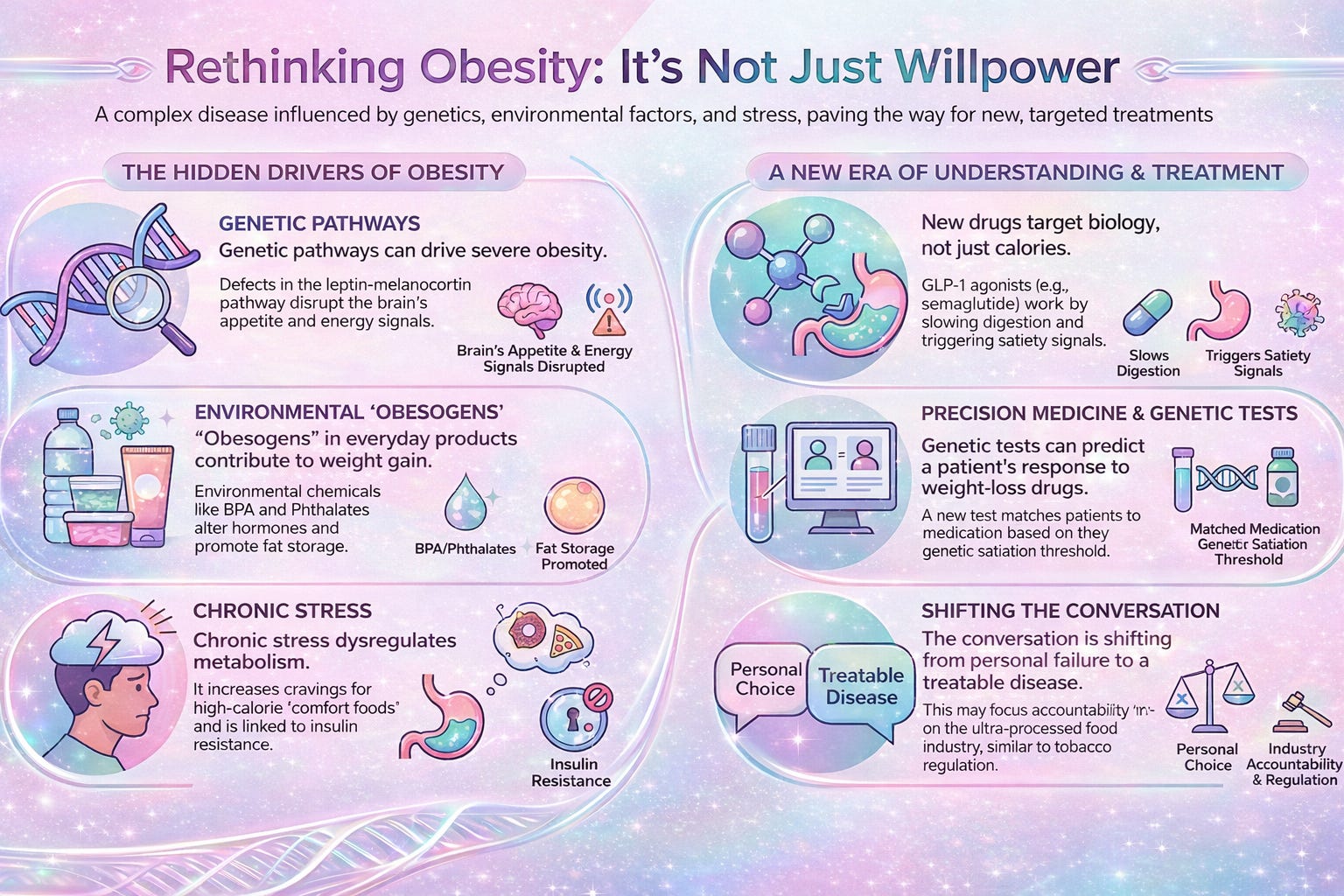
Obesity is a chronic disease driven by biology, not a failure of willpower.
“Eat less, move more” doesn’t work long-term because the body fights to return to its set point.
GLP-1 medications help by regulating hunger signals and improving insulin resistance.
How We Met
The first time I met Dr. Lindsay was in a 2-part series on The Plus SideZ Podcast. Kim Carlos didn’t know it at the time but she was introducing me to someone I’d come to deeply respect and treasure in the years that followed.
Lindsay Ogle was the first obesity specialist I met when I started advocating for affordable access to GLP-1s and she changed my whole perspective on what a doctor-patient relationship could feel like. The compassion radiated right out of her.
Let me put this into perspective.
Compassionate Obesity Care
After that first recording, Lindsay graciously gave me her time on my podcast back when it was still called The GLP-1 Collective Podcast. We had a full, beautiful, thoughtful, hour-long conversation… and I didn’t record it.
Not kidding. A full hour. Gone.

I was devastated, nearly-in-tears devastated. This wasn’t just anyone’s time I had wasted, this was a doctor’s time.
M-o-r-t-i-f-y-i-n-g
But Lindsay re-recorded the whole thing, just as graciously and generously as the first time. And then she went a step further: she joined me for a free, live GLP-1 Q&A for the GLP-1 Collective nonprofit community.
What’s more though, she checked in.
When I was struggling to get the nonprofit off the ground, she reached out as a friend, to ask if I needed help. And I can tell you right now: that meant more than she will ever know.
But that wasn’t the last I’d hear from her.
Modern Metabolic Health with Dr. Lindsay Ogle, MD
Lindsay made me the very first guest on her YouTube series, which has since grown into a full-blown podcast of its own, where she interviews doctors and dietitians.
“I learn a lot as well that the dieticians are teaching me and that we can share during that conversation and then I can also take back to my patients moving forward.”
We talked about GLP-1 advocacy, not because she wanted to hear my story for the 5th time, but because she actively advocates for her patients’ right to care.
There’s this quote that’s always stuck with me:
“Think of empathy as this kind of sacred space. When someone’s kind of in a deep hole and they shout out from the bottom and they say, ‘I’m stuck. It’s dark. I’m overwhelmed.’ And then we look and we say, ‘Hey. I’m gonna climb down. I know what it’s like down here. And you’re not alone.’
Sympathy is: ‘Oooh. It’s bad. Uh-huh. No, you want a sandwich?’ Empathy is a choice. And it’s a vulnerable choice. Because in order to connect with you, I have to connect with something in myself that knows that feeling.”
Lindsay climbs down into the hole with you.
In an effort to support my advocacy work, she connected me with two more powerhouses:
Dr. Nina Crowley, from In The Know With Nina Podcast, who joined me in Season 2, Episode 9 of the GLP-1 Studio Podcast.
And Steph Wagner, the Bariatric Food Coach, who you’ll meet in an upcoming episode.
She knew they were both members of the Obesity Action Coalition, and she thought they could help me in my work. And they did.
Since then, I’ve become a member of the OAC’s influencer group, joining their efforts to advocate for broader access and better care. That door opened because Lindsay made sure I wasn’t walking this path alone.
But all of this shared effort is rooted in something bigger than any one podcast episode:
The urgent need to help people understand that obesity is a chronic, biological disease.
Eat Less, Move More vs Biology
My favorite part of this whole interview is when Dr. Ogle explains the Set Point Theory.
“When we cut back on calories, our body thinks it’s starving. It slows our metabolism, increases our hunger hormones, and tries to protect us. Those are measured, real changes in the body—and it is nearly impossible to overcome that long term.”
She explains that eat “eat less, move more” doesn’t work because our biology is programed to fight weight loss to get back to that “set weight.”
This theory has been studied since the 1940s.
One of the most famous early examples is the Minnesota Starvation Experiment, where participants who lost significant weight ended up regaining even more after the study ended. The body triggered intense hunger until both fat and lean mass were fully restored. It didn’t matter that they were no longer in crisis. Their biology still acted like survival was on the line.
We’ve had decades of science backing this up. And yet, the advice hasn’t changed.
But what hit me the hardest wasn’t the science. It was the emotional relief in hearing it said so clearly:
“Anybody who has obesity—it’s not for a lack of willpower. Most people who carry excess weight are the ones who have done all the diets, all the exercise programs, tried all the supplements, went to their doctor and asked for help. Got the generic advice to ‘eat less and move more.’ And it doesn’t work. We’ve been trying this for decades, and the problem is getting worse.”
This is why obesity is recognized as a complex, chronic, multifactorial disease, not a failure of willpower, but a medical condition that often requires medical intervention.
Dr. Ogle puts in the work to make the science of obesity understandable and to shut down the tired willpower blame that keeps people stuck in shame.
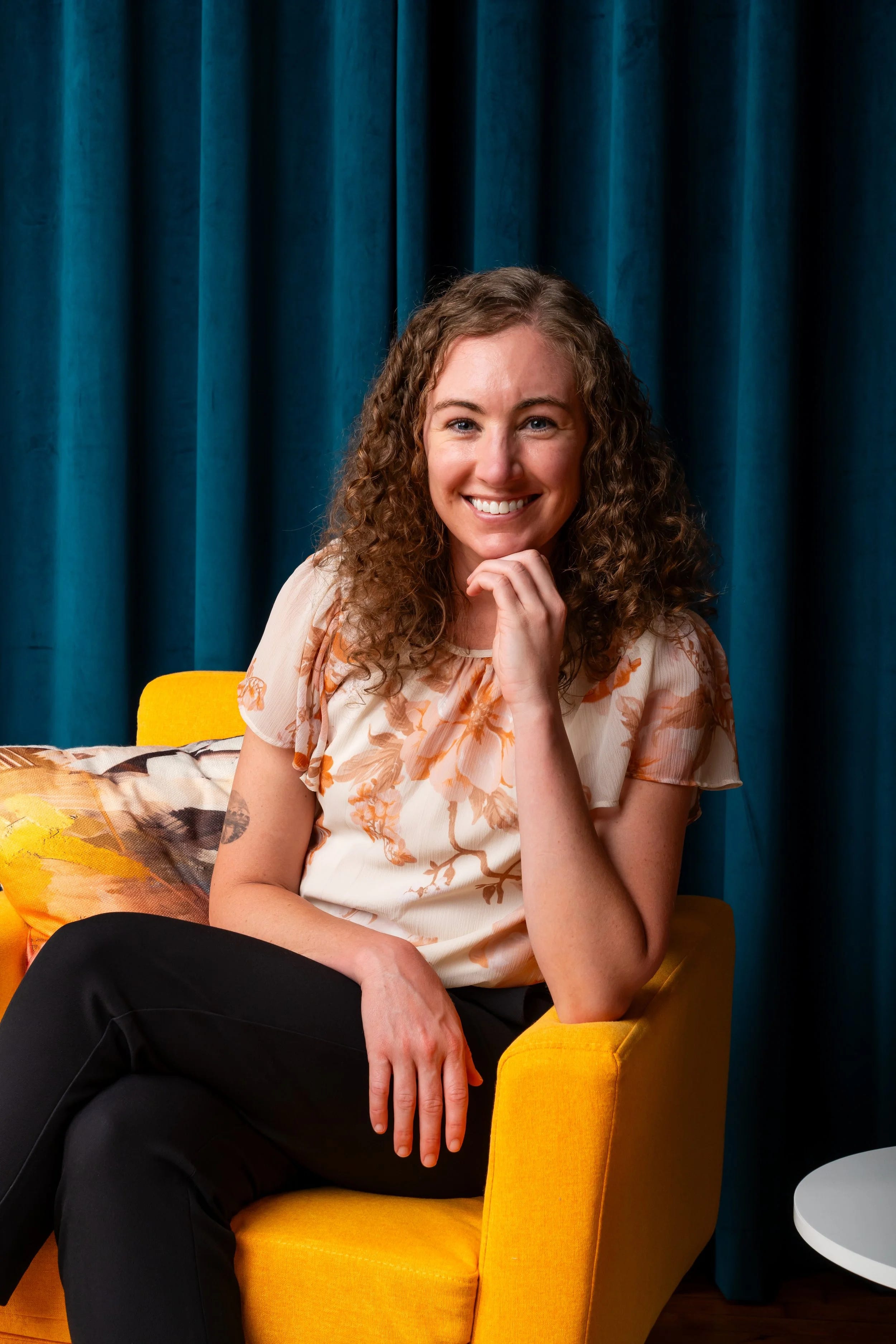
Learn More & Connect with Dr. Ogle
If you want to hear more of Lindsay’s compassion-first approach, you can find her using the links below:
Thank You For Reading
Thank you for reading. If you’re ready to dig deeper into GLP-1s, metabolic health, and compassionate obesity care, you can listen to more episodes on your favorite podcast platform.
Learn more and listen here:


