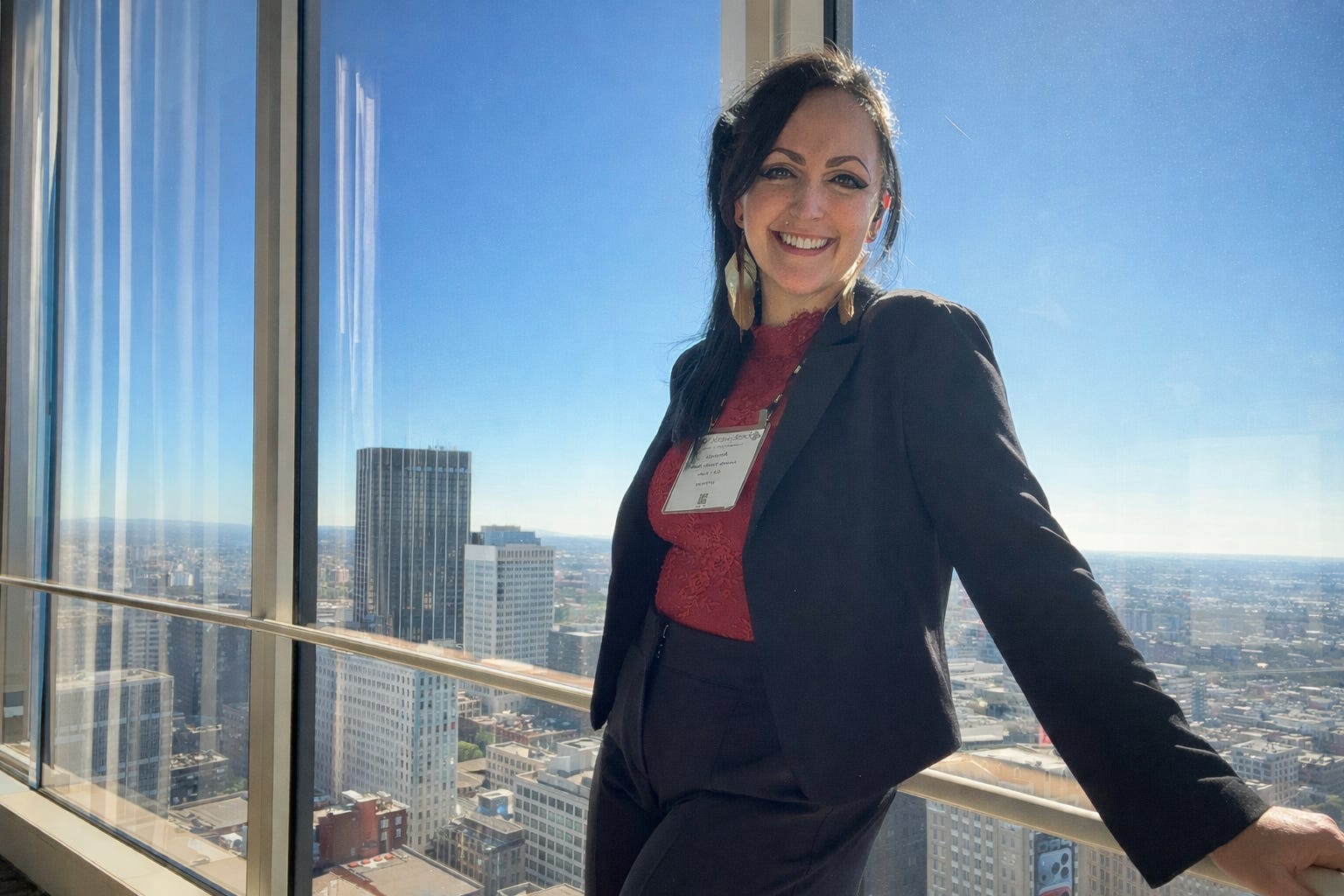
🔔 Quick Call-Out for GLP-1 Patients and allies
On The Pen started a petition to stop the SAFE drugs act, a proposed policy that could cut off access for thousands of GLP-1 patients and prevent compound pharmacies from stepping in during future GLP-1 shortages.
You can sign here. Thank you for standing with us.
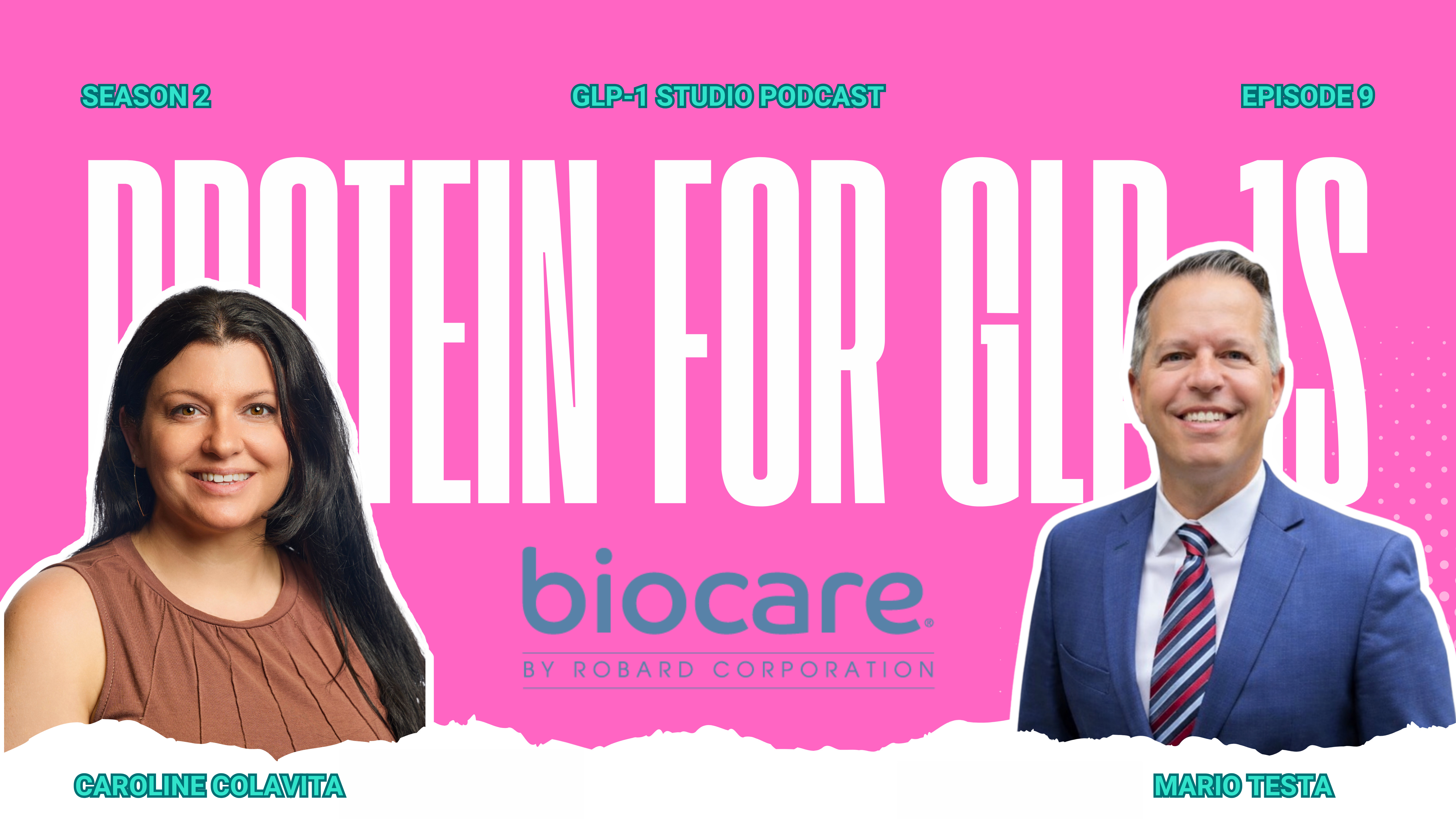
A lot happened last month and BioCare was a huge part of it.
I sat down with Caroline Colavita from BioCare Nutrition and Mario Testa from their parent company, Robard. Caroline leads brand and growth. Mario is the VP of Sales. Together, they’re helping shape what real nutrition support looks like for GLP-1 patients.
BUT… This is so much more than just an interview.
Key Takeaways
BioCare shows up for GLP-1 patients beyond the product.
Their presence at ObesityWeek centered real connection, advocacy, and community, not just branding.BioCare’s protein is designed around how GLP-1 patients actually eat.
It simplifies nutrition, replaces multiple supplements, and supports patients who struggle to meet protein needs through food alone.Data confirmed protein support is helping preserve muscle.
Body composition scans provided real evidence that consistent protein intake is supporting muscle during GLP-1 weight loss.BioCare and Robard addressed lead concerns directly and proactively.
Third-party testing and clear communication helped cut through fear around protein powders.Robard brings decades of clinical nutrition experience into modern GLP-1 care.
Together, BioCare and Robard are adapting long-standing medical nutrition support to meet the realities of today’s GLP-1 and weight loss patients.
How I met the BioCare Girlies
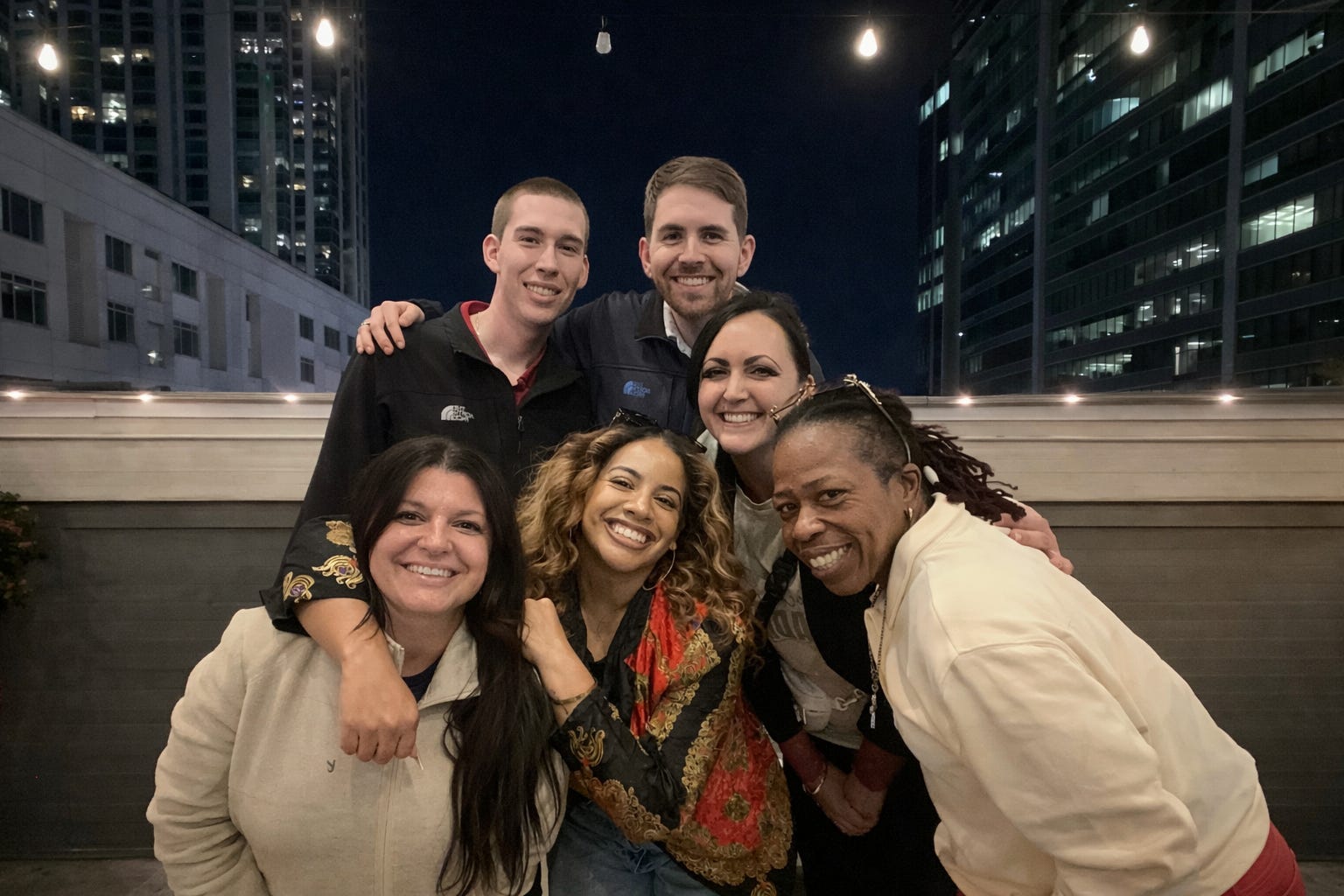
When I was at Obesity Week in Atlanta last month, BioCare didn’t just show up, they brought the whole vibe.
They hosted multiple GLP-1 community events throughout the week, and I’m a little embarrassed to admit that the time I spent with them might be the most memorable part of the entire conference.
I met thousands of extraordinary people:
I shook hands with some of the leading minds in obesity science and medicine.
I met several guests I’ve interviewed for the GLP-1 Studio Podcast, including my personal hero, Kim Carlos, from Season 1, episode 3.
I was even filmed with Michael Donnelly-Boylen and Zachary Niemiec by a Danish documentary crew in real time as the White House dropped the biggest policy news in GLP-1 patient history.
The Danish Broadcasting Corporation (not related) who came to my home last September later called me for my reaction as well.
Truly surreal, “how is this my life” kind of moments, nothing about that week was small.
And still.
The moments that stayed with me the most weren’t the headlines or the cameras or the proximity to power. They were the quiet, connective, human moments I spent with the BioCare girls.
Let me tell you why…

Community Is the Story (Not the Product)
Like I said BioCare didn’t just host one community event at Obesity Week and call it a day.
They joined us at the Downsized meetup.
Showed up for me at the GWCC to help advocate for affordable access to GLP-1s.
And hosted several GLP-1 meetups, different spaces, same energy.
None of it felt transactional. It felt warm and honestly… fun.
Through those events, I met several GLP-1 patients who quickly turned into friends, like Jackson Lemay, who listeners might recognize from Season 1, Episode 4 of the GLP-1 Studio podcast.
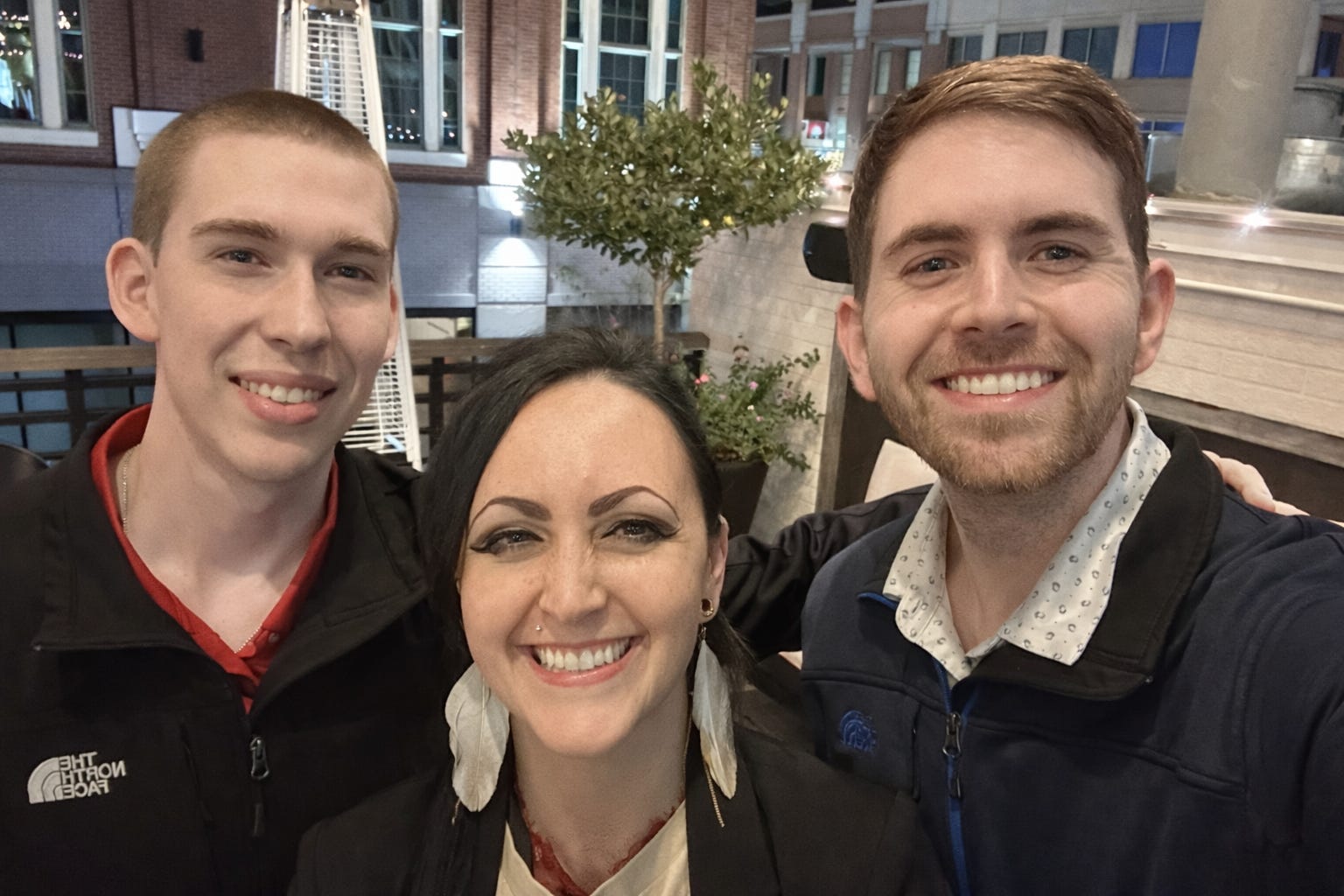
Back when the podcast was just getting started, Jackson was instantly supportive, before I even really knew him. Warm, welcoming, and clearly someone who advocates loudly and proudly, not just for GLP-1 patients, but for people in general.
Meeting him and his husband felt like running into friends you didn’t know you were missing your whole life. I talked with them all night and easily could’ve kept it up into the morning and beyond.
I also met Jesse Kesner founder of Alnu Health, who was featured in Season 2, Episode 4. I can’t imagine there is a single person who has met Jesse and didn’t immediately adore him. I know I did, and in a weird, very on-brand twist, Jesse is also the reason the BioCare girls and I fully connected.
Caroline, Delilah, and I initially met through zoom, but when Jesse’s name came up, everything clicked. It was an immediate, collective, “Wait… you know Jesse?” moment. Yes. I know Jesse. I love Jesse. They love Jesse. And just like that, the universe said, great, you’re all friends now.
I met too many people to list them all, but the connections made in this space are unlike anything I’ve experienced before. This is a shared sentiment.
GLP-1 patients are connecting almost instantly, on another level.
Community in the GLP-1 space isn’t just nice to have. It’s necessary.
GLP-1 patients are not just meeting each other online. They are traveling cross country, sometimes multiple times a year, to form lifelong connections.
Most of us are figuring this out in real time. These medications aren’t new, but for the mainstream? This is uncharted territory. There’s a serious lack of clear information, limited resources, and new “GLP-1” products popping up almost daily. It can feel overwhelming fast.
During this interview, Caroline, who is a GLP-1 patient herself, said something that really stuck with me:
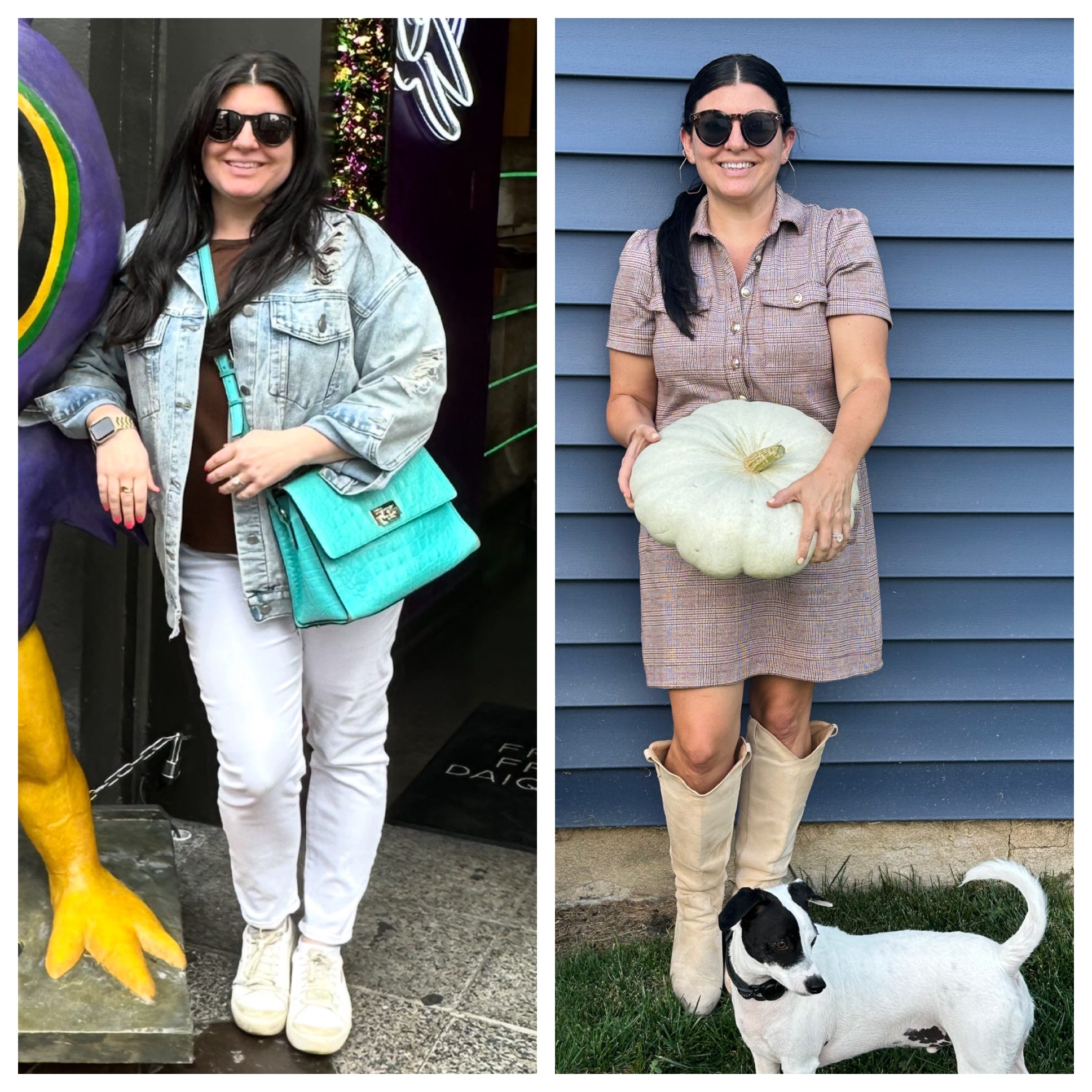
“…it’s scary and you do feel alone and you go on the internet, there are some mean people out there. This community, I can’t even explain how nice these people are to each other. We’ve met up in real life and every single interaction is just so lovely, and we get each other. We know how isolating it can be. And now we’re able to come together, live our best lives and share that with others.”
We’re all trying to make careful decisions about our health in a world that loves to misunderstand and take advantage of us. What matters most to me isn’t that a company makes products for GLP-1 patients, but that they’re paying attention to the humans actually using them and providing something genuinely helpful.
I Like Being Marketed To (I Just Don’t Like Being Lied To)
My husband hates being marketed to. He watches YouTube, but absolutely refuses to sign in because he doesn’t want the algorithm ...
I’m the opposite.
I actually like seeing things pop up that I might genuinely want or need. Show me something useful. Show me something I can benefit from. Half the time, I wouldn’t find it otherwise.
The problem isn’t marketing. The problem is misleading marketing.
And GLP-1 patients are about to be flooded.
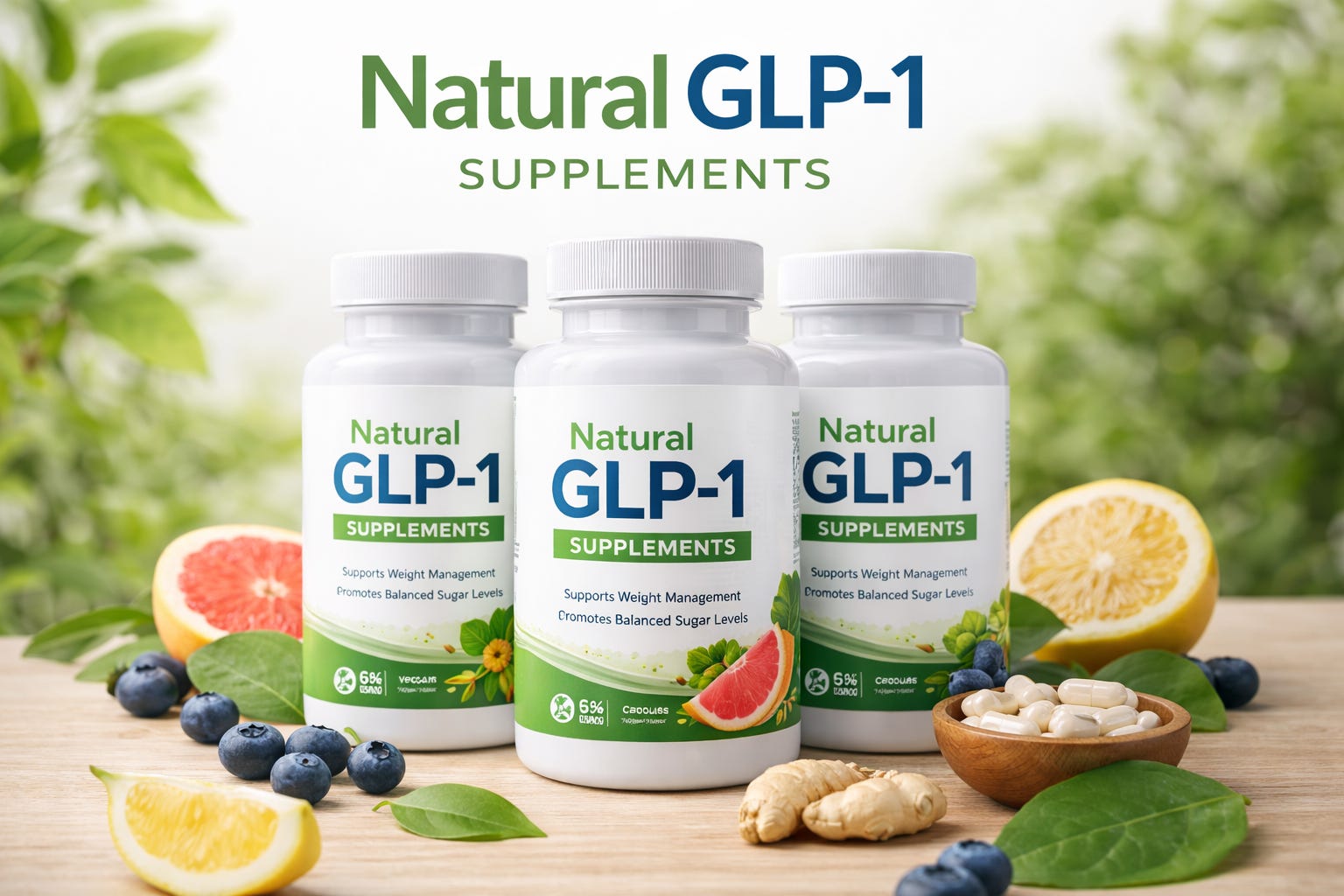
We’re already seeing it. “Natural GLP-1 supplements” in the form of patches, gummies, pills, you name it. I’ve reviewed a few, and there’s nothing special about them except their ability to give people hope, and then crush it.
That’s the part I can’t tolerate.
This isn’t casual. This is life-changing, potentially life-extending territory. People are already dealing with fears about needles, concerns about dependency, anxiety around side effects, and the constant weight of other people’s judgment.
When something is marketed to this community, it has to be honest about what it can and cannot do. Otherwise, it’s not just ineffective, it’s harmful.
That’s why I’m selective about who I talk to and what I share. I want to interview people who are actually building things for GLP-1 patients, not just trying to capitalize on them. I want to vet them. I want to understand how they operate. And eventually, I want to be able to point people toward a short list of companies that are genuinely doing right by this community.
Which brings me to BioCare.
Because as tempting as it might be to assume they won me over immediately… that’s not actually what happened.
Why BioCare Didn’t Win Me Over at First
BioCare didn’t instantly win my heart. And I think that’s important to say out loud.
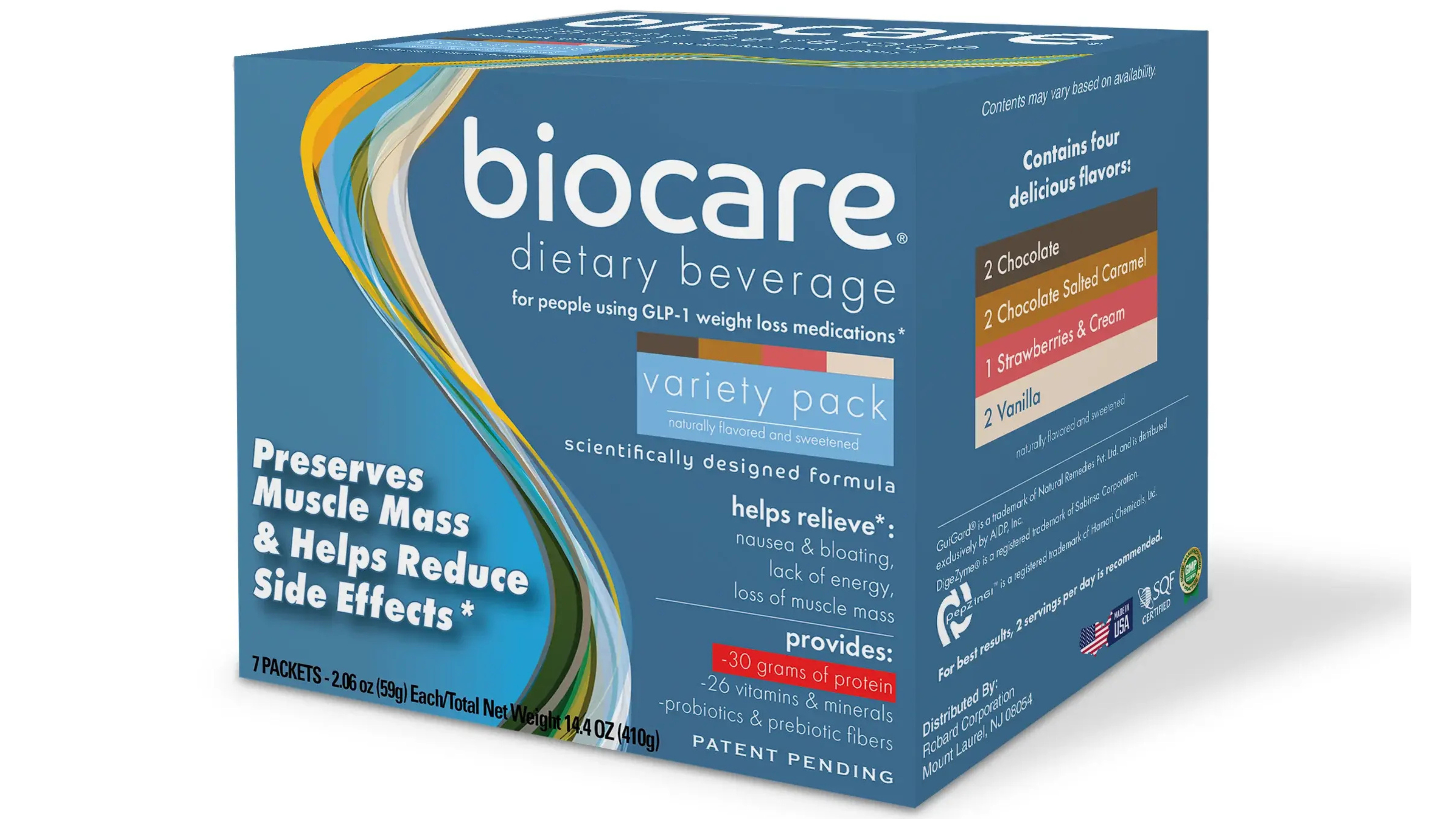
The first time I saw it, I was interested, sure. It’s clearly made for GLP-1 patients, and when you start a GLP-1, you immediately want to know what might actually help support this whole new version of your life.
Honestly, having “GLP-1” in the description alone piques my curiosity. But if I’m being real, the price tag gave me pause. It was very much a do I need this, or is this just expensive optimism? moment. The math wasn’t mathing at first.
I toyed with the idea of buying it more than once, then talked myself out of it. But it kept popping up in the community. And at a certain point it started to feel like that whole “if your friends jumped off a bridge…” situation. And yeah. I probably would. Peer influence is real.
So eventually, I gave in.
I actually started drinking BioCare before I ever met Caroline, Mario, or Delilah. And truthfully, it tasted good. I’m pretty picky about protein because most of them taste like chalk coated in an aggressively chemical sweetness.
This wasn’t the usual “this is fine if I choke it down fast” kind of good. It was good enough that I only needed to mix it with water, which is saying something. Most protein shakes require milk for me.
Strawberries and cream is still my number one recommendation and always will be.


Quick disclosure: this is an affiliate link. If you use it or code STUDIO, I make a small commission at no extra cost to you, and you get 20% off. Your purchase also helps fund my very real protein habit, which I appreciate more than you know.
And still, even then, BioCare hadn’t fully won me over.
What finally did it was meeting them in person.
Seeing how they showed up for the GLP-1 community. Watching how they listened. Feeling the emphasis on people over products. The vibe wasn’t salesy. It was thoughtful. It was human. It was very clear that community wasn’t a marketing angle for them, it was the point.
That’s when it clicked for me. I wasn’t just drinking a protein shake anymore. I was supporting a team that actually understands the space they’re operating in.
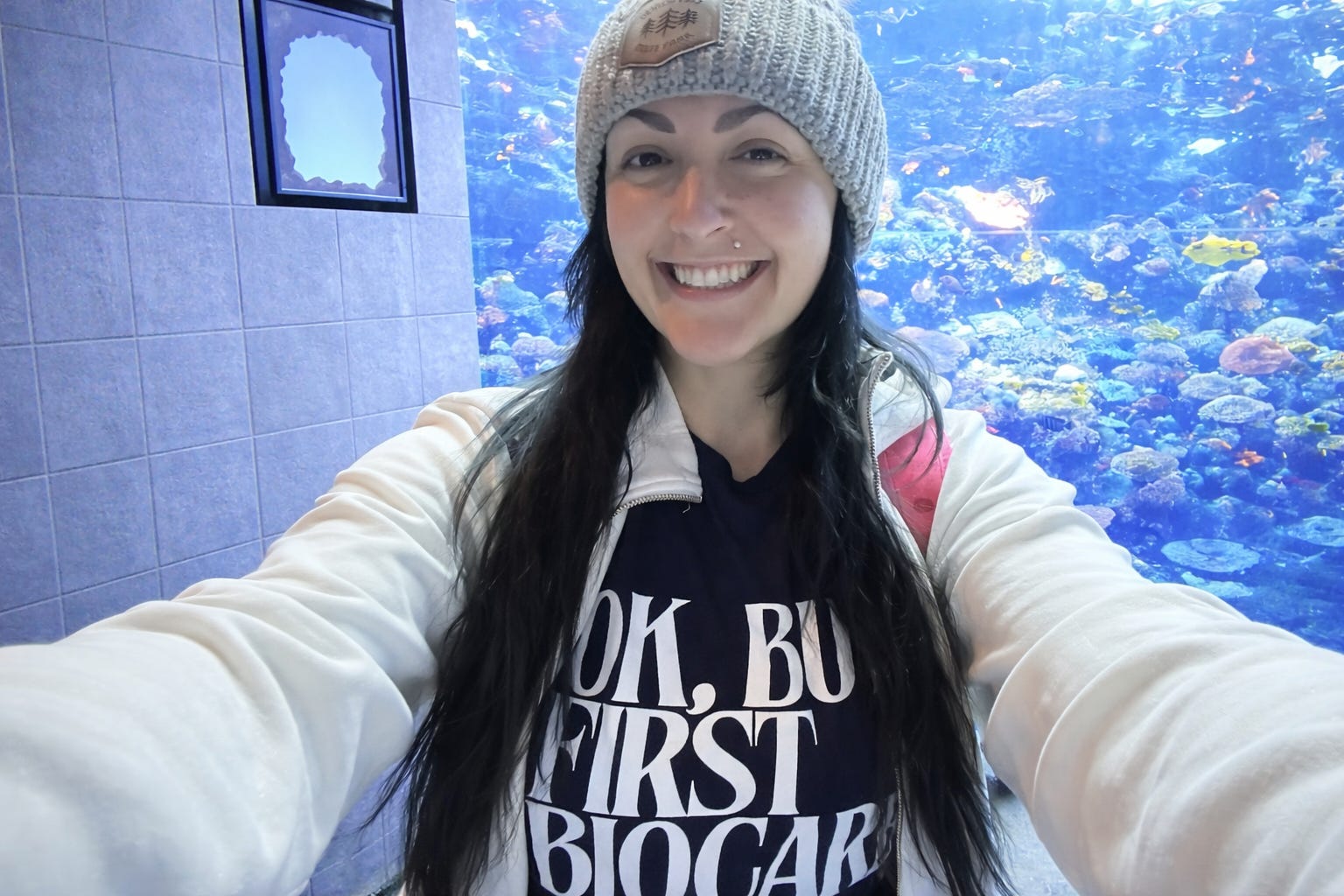
That’s when I became a proud BioCare baddie.
And I’m glad I did because I got hard proof that their protein is making the difference.
Muscle, Fear, and the Data That Finally Gave Me Peace of Mind
In the last episode of the GLP-1 Studio podcast, I interviewed Dr. Nina Crowley from SECA Health. While I was at Obesity Week, I not only ran into Nina, but I had the rare opportunity to get scanned myself.
Keep in mind, a SECA scan has been shown to closely match MRI results, which are the gold standard for measuring body composition. And I can’t overstate how much I needed that data.
I’ve been on a GLP-1 for about a year now. I’ve lost over 50 pounds. And like a lot of other GLP-1 patients, I’ve been quietly terrified about what that might mean for my muscle.
We all know the average bathroom scale is doing its best, but it’s not exactly medical-grade. It can show you a general trajectory, but it can’t tell you what’s actually happening inside your body. And when you live in a world where everyone is yelling about muscle loss, it’s really easy to assume the worst.
When I saw my scan results and learned my muscle was in good shape, I felt instant relief. After a decade of bulimia and periods of punishing over-exercise, knowing I’m no longer destroying my body and still maintaining healthy muscle felt like a massive win.
Right now, I drink one protein shake a day, lift twice a week, and walk the rest. That’s it. And the data confirmed it’s enough for my body.
But muscle isn’t the only thing that patients angst over.

Food After Food Noise on a GLP-1
GLP-1s don’t necessarily erase food noise. They just redirect it. Instead of obsessing about when we eat next, nutrition becomes top of mind in a completely different way.
For me, getting enough protein from food alone isn’t realistic. I rarely eat meat, and if I have so much as a piece of steak, I’m reaching for papaya enzymes like it’s my job.
That’s why at least one protein shake a day isn’t optional for me. It’s foundational.
And before BioCare, that meant protein shakes plus a small pharmacy worth of supplements, vitamins, and minerals. All of it. Which adds up fast, in cost, mental load, and honestly, how much your body has to process every day.
Being able to simplify that down to one shake a day is huge.
But we can’t ignore the question everyone’s asking right now. What about the lead?
Lead in Protein Supplements & Shakes
Just before this interview, my husband saw a news segment about protein powders with high levels of lead.
Suddenly, he was looking at my daily protein habit like it was a slow-moving crime scene. According to the headlines, people were basically giving themselves lead poisoning in the name of gains. Great. Love that journey for us.
To be fair, it was a legitimate concern. Protein supplements are everywhere right now. Everything has protein in it. Bars. Chips. Pop-Tarts. And when something becomes that ubiquitous that fast, quality control can get… questionable.
So I asked Mario about it.
He shared that as soon as that news started circulating, they immediately sent their products out for third-party testing.
“What I can tell you is that we’ve third-party tested all of our products. They contain near-untraceable amounts of lead. Depending on the product, you’d have to consume somewhere between 16 and 24 servings in a single day to even approach the benchmark, which is about 8.8 micrograms per day.”
That response told me a lot. Not just about the testing, but about how seriously they take concerns when fear starts spreading faster than facts. Any company can say they’re trustworthy. Not everyone backs that up by proactively testing their products when the internet starts spiraling.
But something else that stood out was how BioCare’s parent company, Robard, has quietly been helping patients all along.

Robard Corporation, Helping Clinicians Help Their Patients
During one of the BioCare events, a long-time Robard customer stopped by, an obesity specialist who owns several clinics in the Atlanta area. She came because she wanted to better understand GLP-1 patients.
Her clinics have used Robard’s medically supervised nutrition programs, New Direction and New Metra, for years. These aren’t vanity shakes. They’re clinical nutrition tools used when patients need real support.
But things have changed.
GLP-1s are changing the entire healthcare system. Keeping up means listening, learning, and being willing to adapt.
Clinics are popping up everywhere, and a lot of them are trying to figure out how to support patients beyond just prescribing medication.
Some have started offering meal kits, which makes sense on paper. Food support is part of the equation. Patients are eating less. Nutrition matters more.
But here’s where real life kicks us in the butt.
Meal kits still require time. Planning. Cooking. Cleanup. Mental bandwidth. And for a lot of people, like me, that’s just asking too much.
I run a nonprofit. a media production platform, host a podcast. and actively advocate. I have a family. I love the idea of cooking. I do not love the reality of it most days. Give me something high protein with fiber that takes five minutes and doesn’t require a sink full of dishes afterward.
And I’m not alone in that.
For a lot of GLP-1 patients, the barrier isn’t motivation. It’s logistics, and when you’re eating less overall, every bite has to work harder. That’s why full nutrition support matters more than meal kits alone.
Not everyone needs recipes. Some of us need reliable, clinically sound nutrition that fits into real schedules and actually helps our bodies. The kind of support that acknowledges how people actually live, not how we’re told we should live.

Watching how BioCare and Robard think about this, especially in the context of telehealth, made the next step feel obvious. I asked if BioCare was planning on teaming up with any weight loss clinics. it seemed like the obvious next step. Robard has been supporting patents through their clinicians for decades. Mario confirmed that they are working on expanding.
And it’s not just telehealth clinics. It’s your local grocery store too. After this interview, I got an update that BioCare was on the shelf at the Hy-Vee near me, and I immediately jumped in the car to check it out.
My son, who just turned 14 last week, recorded and edited the video himself, and we were both ridiculously proud. It turned into a really fun thing to work on together. 💖
And I’m stoked to be able to grab my protein from five minutes down the road, rather than waiting on shipping or stressing about delays. And when I saw they had more than one option?
Let’s just say I stocked up.
This Conversation Wasn’t Really About Protein
It wasn’t even really about BioCare or Robard, at least not in the way people usually mean when brands come up. It was about what happens when companies choose to pay attention to patients instead of just marketing to them. When community isn’t an afterthought, but the point.
GLP-1 access is expanding. Fast. And that’s a good thing. But it also means more noise and more people trying to cash in on a population that’s just trying to improve their quality of life.
What sold me on BioCare wasn’t the product itself. It was the mission behind it, and how deeply I felt it when Caroline said:
“…we want to let people know that we’re traveling, we’re meeting people in real time, we’re having all these conversations... The number one focus is making sure that people stay healthy…”
Patients deserve better. They deserve real support.
If you’re on a GLP-1, or just trying to find answers, I hope this helped. And if nothing else, I hope it reminded you that you don’t have to do this alone.
If you’re curious about upcoming BioCare events in your area, stay tuned, they have a full lineup planned for 2026. You can follow BioCare on TikTok or Instagram to stay connected.
And if you do make it to one, I hope I get the chance to see you there. ✨💕